
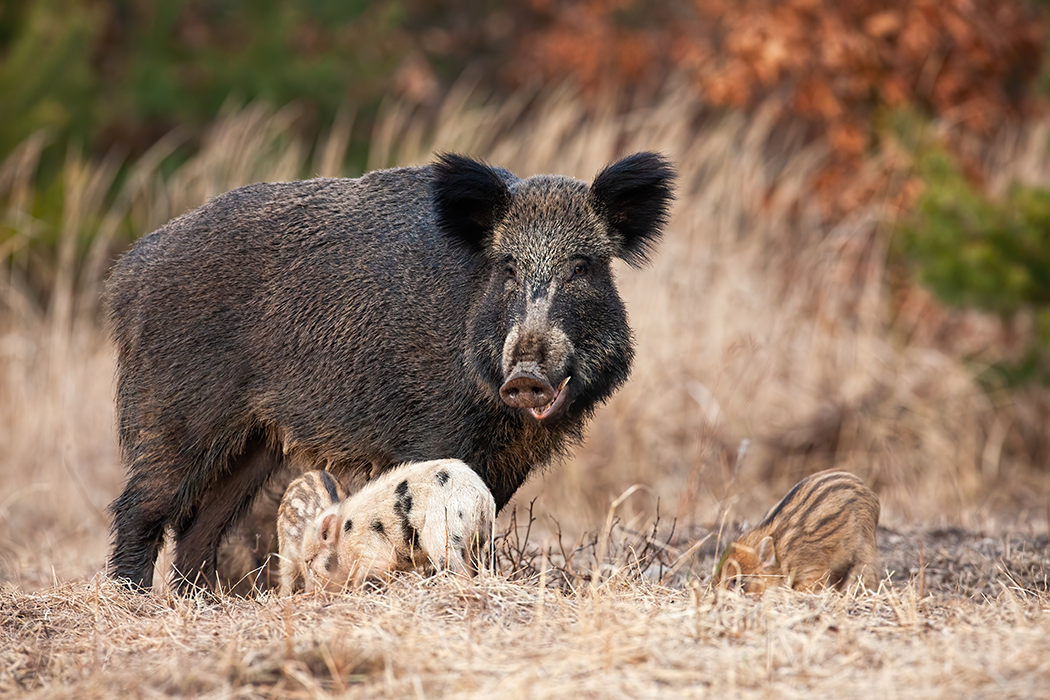
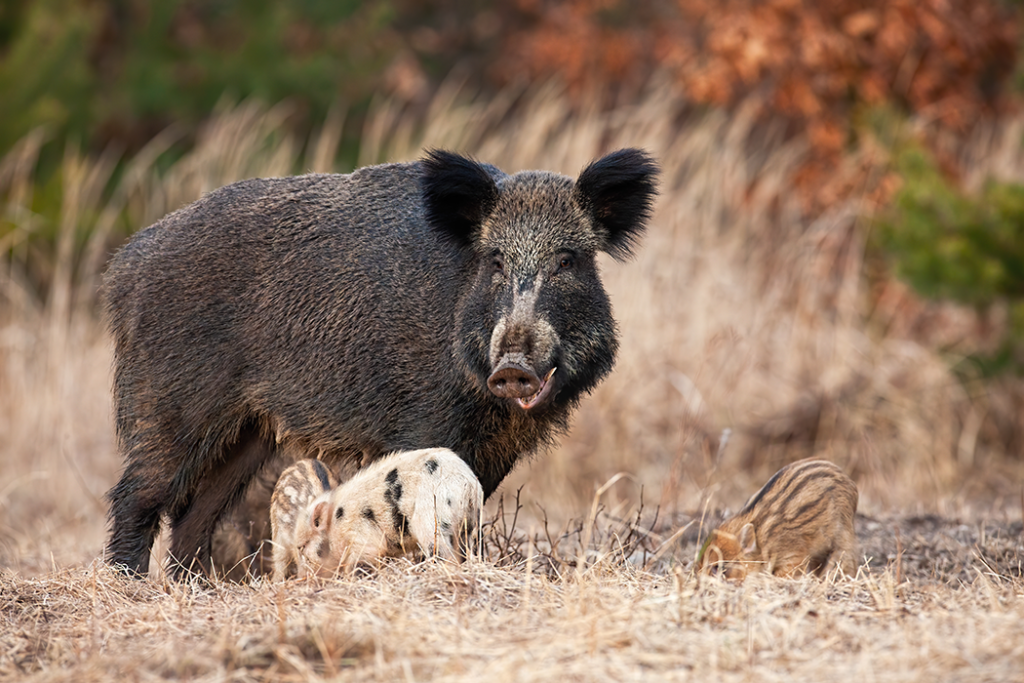
Feral hog hunting plays a critical role in land and wildlife management where populations exist. Feral hogs are invasive, destructive animals that cause extensive damage to crops, pasture, waterways, and native wildlife habitat. Their rooting behavior disrupts soil structure, destroys vegetation, and negatively impacts ground-nesting species. Because of their rapid reproduction and intelligence, population control is a constant challenge.
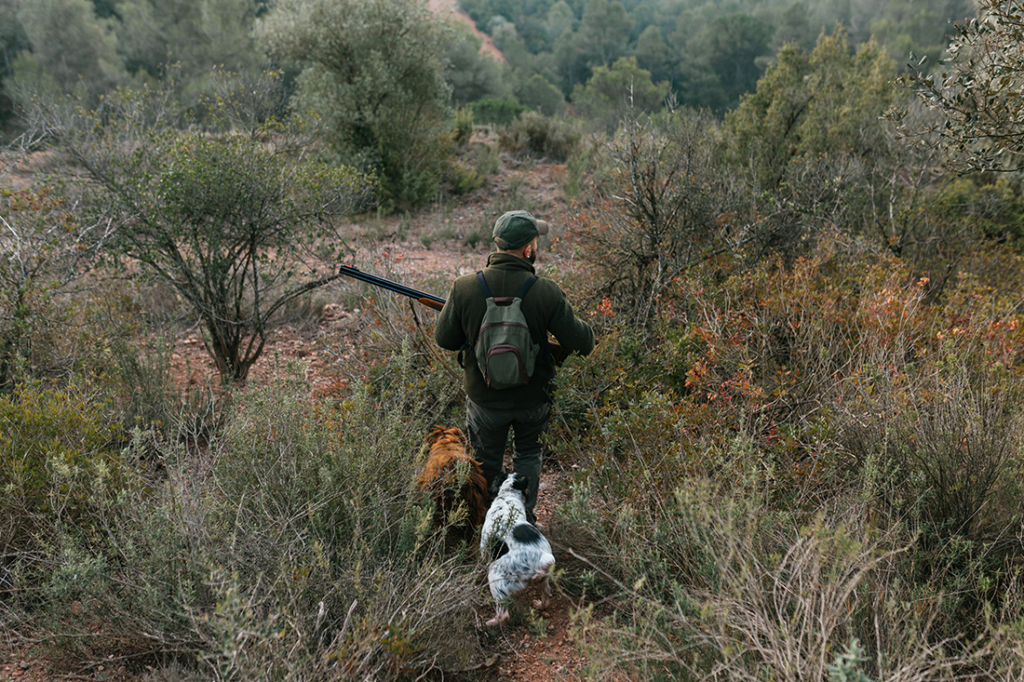
Hogs are highly adaptable and can be hunted using a variety of methods depending on terrain and legality. Spot-and-stalk hunting is effective in open areas, while night hunting is common due to hogs’ nocturnal behavior. Hogs quickly learn from pressure, changing movement patterns and avoiding areas where they have been hunted heavily. Coordinated efforts and persistence are often required to reduce populations effectively.
year round hog hunting
Many states allow year-round hog hunting with minimal restrictions due to the damage they cause. Cold weather concentrates hogs around food and water sources, improving predictability. Feral hog hunting is less about sport and more about responsible land stewardship. Successful hog management benefits agriculture, native wildlife, and long-term habitat health.